Roof Repairs
Leak and tile repairs from Glenbrook to Mount Victoria, where moss on shaded pitches and frost-damaged pointing cause most failures.
Learn more →Clean, rebed, repoint and recoat ageing tile roofs across the Blue Mountains. Built for shaded pitches and frost. Call (02) 4703 5000.
Leak and tile repairs from Glenbrook to Mount Victoria, where moss on shaded pitches and frost-damaged pointing cause most failures.
Learn more →Full re-roofing for mountain homes: weatherboard cottages, Federation houses and steep-pitch builds, each specified for the climate it sits in.
Learn more →Colorbond roofing across the mountains, with non-combustible detailing for homes on bushfire-prone land.
Learn more →Gutter replacement and ember guard for Blue Mountains properties, where leaf litter and ember entry are the same problem.
Learn more →Emergency response across the mountains after heavy rain, hail or wind, starting with a make-safe the same day.
Learn more →Roof inspections and written reports for mountain homes, including pre-purchase checks and insurance documentation.
Learn more →Across the Blue Mountains, restoration outnumbers replacement by a wide margin, and that is not a sales position — it is what the housing stock and the climate produce. The tiles on a 1960s or 1970s roof at Springwood or Blaxland are frequently still structurally sound. What has failed is everything around them: the bedding mortar under the ridge caps, the pointing over it, the valley irons, and the factory surface coating that has long since chalked away.
That is a restoration, and it is a fraction of the cost of a re-roof.
Call (02) 4703 5000 for a free inspection and a written quote. If the roof is genuinely past restoring, we will tell you that too.
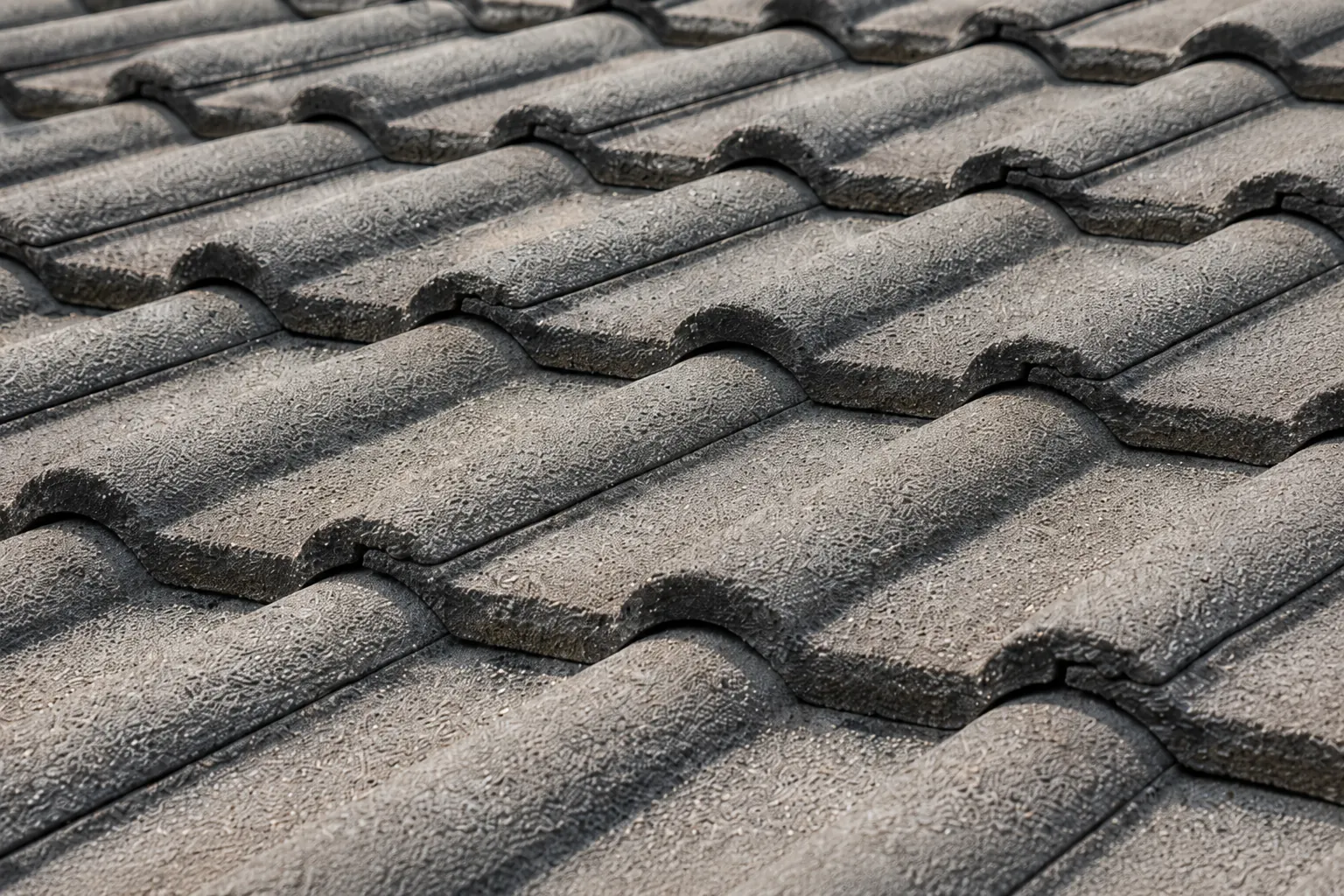
Stand in a street in Leura, Hazelbrook or Lawson and look at the roofs. On most houses one pitch is noticeably darker and greener than the other. That is the southern plane: least direct sun across the year, slowest to dry after rain and frost, and often sitting under established canopy.
Moss and lichen establish there because the surface stays damp long enough for them to take hold. The damage follows:
On the northern plane of the same house, the tiles can still be reasonably clean. The shaded side is where the roof ages, and it is where a restoration earns most of its value.
Above Lawson, and emphatically at Katoomba, Medlow Bath, Blackheath and Mount Victoria, the roof goes through repeated freezing and thawing through winter. Frost is common on winter mornings at this altitude, and settled snow falls two or three times in a typical season.
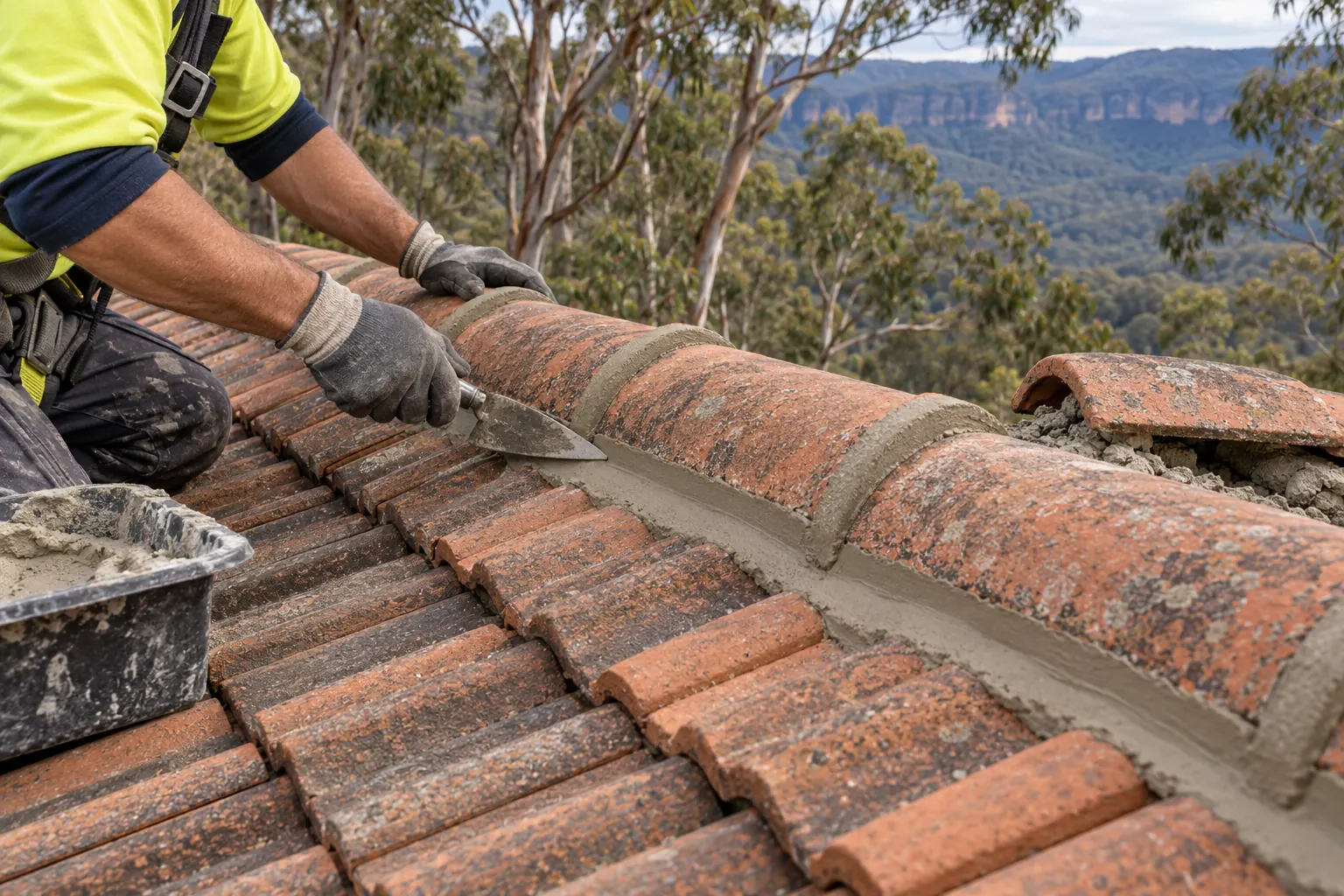
Here is what that does to a bedded ridge. Water soaks into the mortar. Overnight it freezes and expands. In the morning it thaws. Repeat that across enough winters and the mortar fails from the inside: first hairline cracking, then pieces lifting out, then caps that rock underfoot. By the time you find mortar crumbs in your gutter, rain is already getting in at the highest line on the roof and travelling the length of the framing before it shows on a ceiling.
This is why upper mountains roofs need repointing sooner than roofs on the coastal plain, and why the right material is a flexible pointing compound that can tolerate movement rather than a rigid sand-and-cement mix that cannot.
Worth being blunt about the limits:
If the roof is in one of those categories, you will hear it from us at the inspection, not after you have paid for a coating.
Restoration is weather-dependent work. Coatings and pointing both need to cure, and three local conditions interfere with that:
The practical upshot is that we will book your job into a window that gives it a chance, and we will move it rather than coat a damp roof. If that is frustrating, it is still cheaper than doing it twice.
Roof area and pitch. Tile type, because terracotta and concrete need different treatment. How many tiles need replacing. How much of the ridge and hip line needs rebedding rather than just repointing. Access, which on a steep treed block can be the largest single factor. And whether valleys or flashings need renewal once the debris is cleared.
No figures before the inspection. The quote is written, itemised and free.
Call (02) 4703 5000 or send the quote form with your suburb, the roof type and roughly when it was last done. We cover the whole ridge — see where we work for the suburb list. Work is carried out by established, licensed and insured roofing contractors working to NSW Fair Trading requirements.
The repointing is the part that sets the clock, and up here the clock runs faster than on the coast. A flexible pointing compound properly bedded will normally hold well over a decade, and often considerably longer on a lower-mountains roof that does not freeze. The coating is a surface finish and will fade before it fails. We would rather give you that honest range than quote a round number that depends on where your house sits.
On a sound concrete tile, yes, at the right pressure and the right distance. On a crazed terracotta tile or a tile already shedding its surface, aggressive washing will take material off and make things worse. We also do not scrape established lichen off, because forcing it away can damage the tile more than leaving it. The clean is matched to the tile, which is why we look at it first.
Both can be restored, but the work differs. Terracotta is fired clay with its colour through the body, so it is cleaned, repaired and repointed, and usually glazed or sealed rather than colour-coated. Concrete tile is a cement product with a surface coating that wears off, so it is cleaned, repaired, repointed and recoated. Putting an opaque coating over good terracotta is rarely the right answer and we will not push it.
It comes back more slowly, and that is the honest position. A southern pitch under canopy at Hazelbrook or Leura will never be a dry surface, so the realistic goal is to clear the growth, close the paths it opened between tiles, and seal the surface so the next generation has far less to hold on to. Trimming branches that shade the roof does more than any product does.
Either, as long as the roof gets a settled run of dry weather. What we avoid above about 900 metres is the middle of winter: pointing compound and coatings need to cure, and a frost overnight on an uncured surface undoes the work. Fog is the other factor, because a roof that never dries cannot be coated. Shoulder seasons generally give the best working windows.
Tell us what you need and we'll get straight back to you. Prefer to talk? Call (02) 4703 5000 and speak to someone local.
Call (02) 4703 5000